
Decoding Irish Address: What Place Names Tell you About your Home
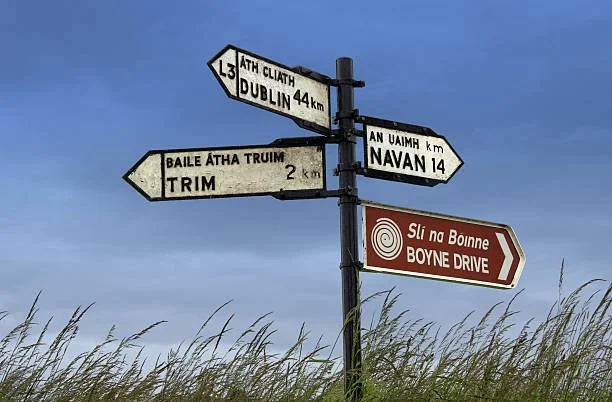
Today, March 1st, marks the official beginning of Seachtain na Gaeilge (Irish Language Week). Over the next fortnight, you will hear more of the native language on the radio, on television, and in local communities as we build up to St. Patrick’s Day.
But if you are relocating to Ireland, or even if you have lived here your whole life, you might not realize that you are already using the Irish language every single day.
It is hidden in plain sight, on your address and on the road signs.
Unlike modern street names that are often just chosen to sound pleasant (think "Oakwood Drive" or "Meadow View"), traditional Irish townlands are highly literal. They act as an ancient, descriptive map of the landscape, telling you exactly who lived there, what the land was used for, or what historical events took place on the very ground your house is built on.
Here is a quick guide to decoding the hidden history of your new neighbourhood.
The Building Blocks of Irish Addresses
If you are looking at properties in Dublin or the surrounding commuter counties of Kildare, Meath, and Wicklow, you will see the same prefixes popping up again and again.
Here is what they actually mean:
Baile (Bally-): This is the most common prefix in the country. It simply means "town," "homestead," or "settlement." When you see Ballymore (Baile Mór), it translates directly to "Big Town." Ballymahon is "Mahon's Town."
Cill (Kil-): Meaning "church" or "monastic cell." If you are buying a home in Kildare (Cill Dara), you are moving to the "Church of the Oak." If you are looking at Kilcock or Kilkenny, you are standing on the site of an early Christian settlement.
Ráth or Lios (Rath- / Lis-): Meaning "ringfort." These were ancient, circular fortified settlements. Highly sought-after Dublin suburbs like Rathmines, Rathgar, and Rathfarnham all take their names from ancient defensive structures that once guarded the area.
Dún (Dun-): Similar to a Ráth, a Dún is a stronghold or fort, often stone-built and of higher status. Think Dundrum (The Fort of the Ridge), Dunboyne, or Dun Laoghaire (The Fort of Laoghaire).
Reading the Landscape
Sometimes, the name of your townland tells you exactly what the physical geography looked like before the housing estates and coffee shops arrived.
Cluain (Clon-): Meaning "meadow" or "pasture." Clontarf in Dublin is "The Meadow of the Bull" (named for the sound of the waves crashing against the bay), while Clonee in Meath is "Aodh's Meadow."
Carraig (Carrick-): Meaning "rock." If you are viewing a property in Carrickmines or Carrickmacross, expect the bedrock to be close to the surface!
Gleann (Glen-): Meaning "valley." Glendalough in Wicklow famously translates to "The Valley of the Two Lakes."
Why This Matters for Your Property Search
When you buy a house, you are buying into a location.
For our international and relocating clients, understanding the origin of a town's name instantly creates a deeper connection to the area. It transforms a random collection of syllables on a map into a vivid picture of ancient forts, oak forests, and riverside meadows. It roots you in the history of your new home.
At GoldGro, we believe that finding the perfect property is about more than just square footage or a sleek modern finish. It is about finding a place where you truly feel you belong, a place with a story you are excited to become a part of.
Are you ready to find your own piece of Irish history? Contact the GoldGro team today, and let’s start decoding the map together.