
Pope Francis's Legacy: A Champion for Global Mobility and the Irish Connection
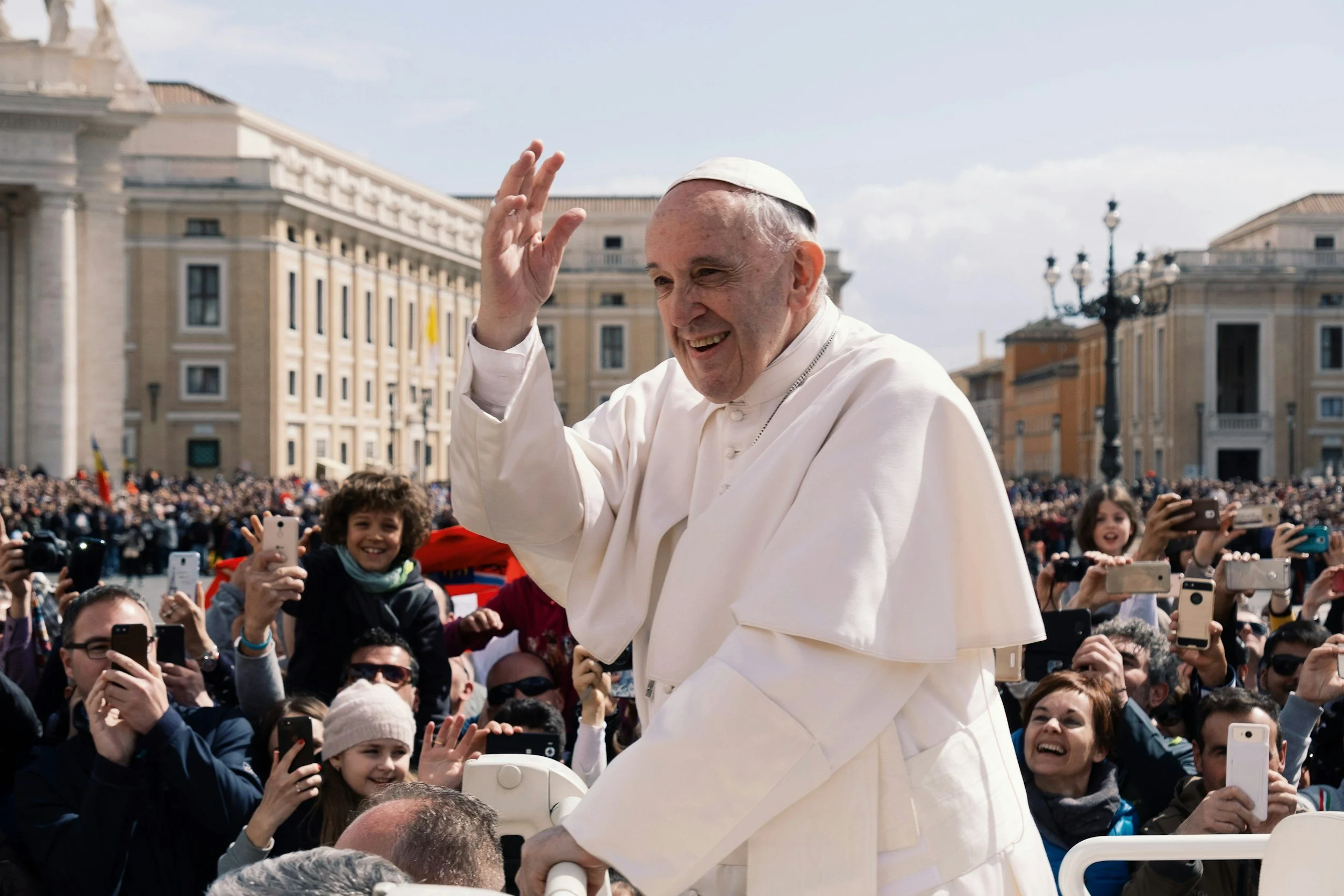
The world woke up today to the somber news of Pope Francis's passing at the age of 88. As the first Latin American pontiff and a transformative figure in the Catholic Church, his death marks the end of a papacy that reshaped how we think about global mobility, compassion for migrants, and the interconnectedness of our world. At GoldGro, as we reflect on this significant moment, we're reminded of the Pope's special relationship with Ireland and his broader message about human dignity that resonates with our mission.
Pope Francis visited Ireland in August 2018 for the World Meeting of Families, the first papal visit to the country since Pope John Paul II's trip in 1979. During his two-day visit, he made a pilgrimage to Knock Shrine in County Mayo and addressed the changing religious landscape in a country that had transformed dramatically in the four decades between papal visits.
What many may not know is that Francis had a deeper connection to Ireland. Before becoming Pope, Jorge Mario Bergoglio—as he was then known—spent time in Dublin in January 1980 to study English during Ireland's challenging economic recession. This early experience may have shaped his understanding of Ireland's resilience and capacity for renewal—themes that would later define both his papacy and Ireland's remarkable economic transformation.
In the visitors' book during his 2018 visit, the Pope wrote of his "gratitude for the warm welcome" and assured "the people of Ireland of my prayers." Today, those prayers are being returned as Irish citizens across the country mourn his passing.
Throughout his papacy, Pope Francis was a tireless advocate for migrants and refugees. His first trip outside Rome in 2013 took him to Lampedusa, Italy, where he commemorated migrants who had lost their lives crossing the Mediterranean. This set the tone for a papacy that would continually emphasize the dignity of those seeking new beginnings.
As the International Organization for Migration noted in their tribute today, Pope Francis was truly "a moral voice for migrants and the most vulnerable." From 2013 when he took office to the present day, the number of forcibly displaced people worldwide has increased dramatically from 51 million to well over 100 million—a humanitarian challenge that Francis consistently urged world leaders to address with compassion rather than fear.
For high-net-worth individuals considering relocation options, Pope Francis's emphasis on human dignity and ethical responsibility provides an important framework for considering such decisions. At GoldGro, we believe that mobility decisions, whether motivated by opportunity, security, or quality of life, should be approached with both personal goals and broader ethical considerations in mind.
Ireland's reaction to Pope Francis's death reflects the enduring significance of the Catholic Church in Irish culture, despite the country's increasing secularization. Taoiseach (Irish Prime Minister) Micháel Martin expressed "profound sadness" at the news.
In Dublin, mass-goers described feeling "as if a relation died," according to reports from The Irish Times, while President Michael D. Higgins highlighted the Pope's acknowledgment of "the scandal of child abuse, including in the Church" during his Irish visit as an important step toward healing.
Across denominations, Irish religious leaders have paid tribute to Francis's humility and commitment to interfaith dialogue. The leader of the Church of Ireland described him as "a manifestly modest man" whose legacy of bridge-building will endure.
Pope Francis's papacy coincided with a period of increasing global mobility and heightened debates about immigration policies worldwide. As a "son of immigrants" himself (his family had migrated from Italy to Argentina), Francis brought personal understanding to these issues.
His consistent message was that we should build bridges rather than walls—both literally and figuratively. In a world where high-net-worth individuals increasingly seek diverse residential options and citizenship portfolios, this perspective invites us to consider not just what a new home offers us, but what we might contribute to our adopted communities.
At GoldGro, we see the choice to establish residency in Ireland as more than a pragmatic decision about taxes, education, or quality of life—though those factors remain important. We view it as embracing membership in a community with its own rich traditions of both emigration and welcoming newcomers.
As we mourn Pope Francis, we're reminded of the values he championed that are also woven into Irish society: concern for community welfare, appreciation of natural beauty, and a sense of global responsibility. Ireland's recent achievement as the #1 ranked passport globally reflects its standing as a respected neutral nation with strong international relationships.
For those considering Ireland as a destination for relocation, the country's balanced approach to tradition and progress offers a compelling environment. From its world-class education system to its vibrant cultural scene, Ireland continues to welcome those seeking not just a new address, but a meaningful connection to a community with global outlook and local heart.